
Three independent questions
Check nicotine, caffeine and tobacco leaf separately. A pouch can contain caffeine without nicotine. Another can contain no caffeine while still carrying amino acids or other supplement ingredients. Tobacco-free wording alone does not settle whether nicotine is present.
A plain flavor pouch is a further possibility. If you want a product without nicotine, caffeine or supplemental actives, inspect all three dimensions. A label saying zero nicotine answers only one of them. Retailer category names and a familiar round can are insufficient to identify the contents.
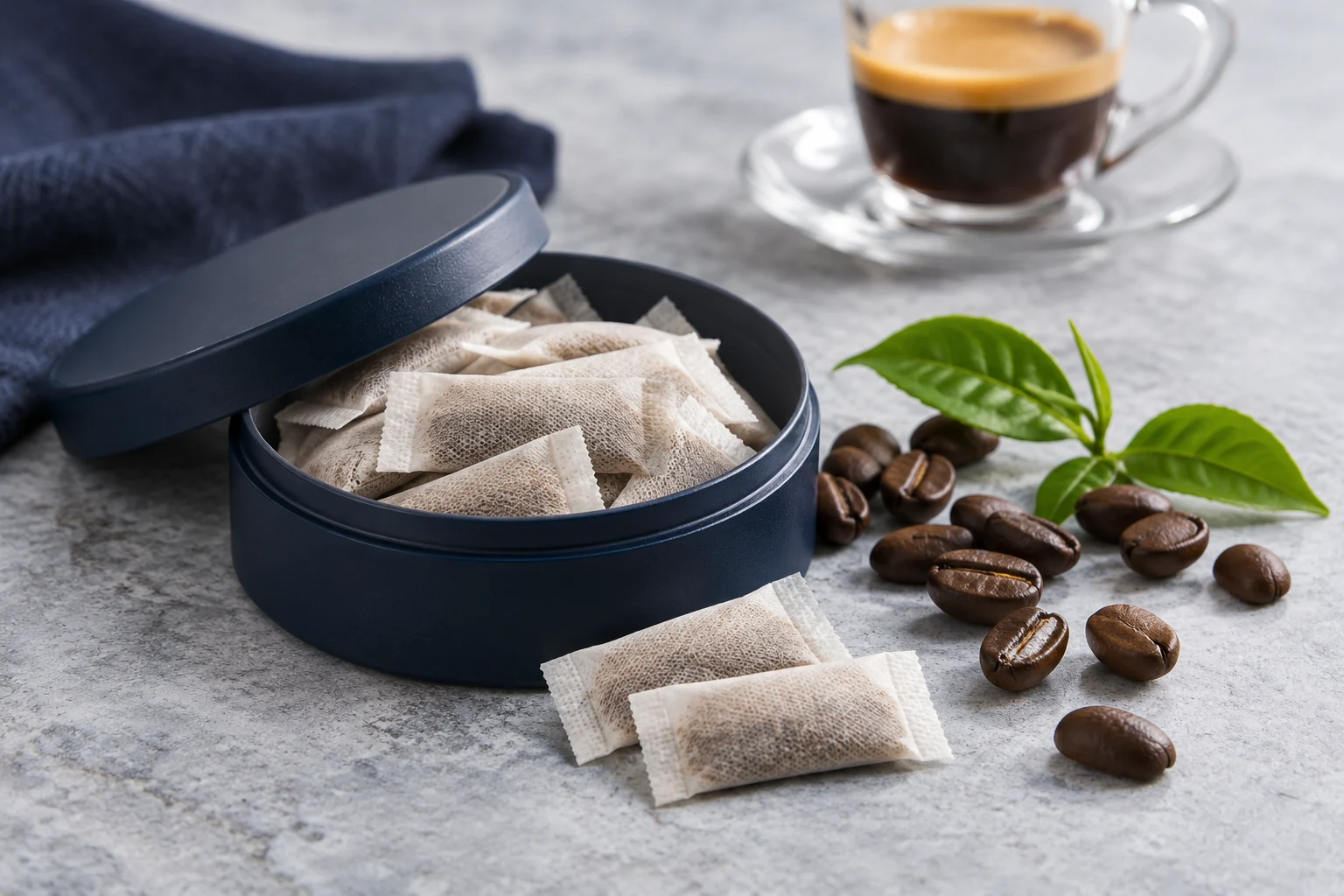
Coffee pouches and white pouches
Coffee-based pouches use a coffee-containing filling. Coffee flavor can also be added to a different filling, so flavor and base material need separate fields. A product described as a white pouch may use a fiber carrier, but the exact carrier and other ingredients still depend on the label.
Grinds distinguishes coffee products from its Energy and Focus lines. Its FAQ gives different declared caffeine amounts across products and identifies caffeine-free lines. Recording one caffeine value at brand level would lose those differences. Compare the exact line and flavor rather than relying on the brand name.
What a nootropic label reveals
Nootropic describes product positioning; it is not a standardized formula. NZE markets Energy and caffeine-free Focus lines. BRAVO also discloses a caffeine-free Focus formulation, with named amounts for several ingredients. The products share a use case without necessarily sharing their formula or evidence.
Look for the amount per pouch, ingredient form and the presence of a complete supporting ingredient list. A named ingredient without a quantity gives less information than a fully specified dose. Even a complete quantitative list leaves questions about release, absorption and finished-product performance.
Track declared caffeine across sources
A pouch amount should be considered alongside drinks, foods and other products containing caffeine. Our tally tool multiplies declared amounts by the number used and adds the entries. It does not estimate blood concentration, metabolism or a personal safe allowance.
The FDA consumer guidance discusses substantial variation in individual sensitivity and circumstances. Population-level guidance should not be turned into an automatic daily pouch recommendation. If a label is unclear about serving size or amount, resolve that uncertainty before using it in a total.
Why faster absorption needs its own evidence
Placement in the mouth is an observation about use. A claim about buccal or sublingual absorption is a claim about delivery. The two oral locations are also different. A faster effect cannot be calculated from the ingredient list or from the fact that the pouch is used without water.
Useful evidence would identify the exact product, dose, study participants, comparator and measured endpoints. A taste appearing quickly is different from an active ingredient reaching a measured concentration in blood. An individual report about feeling alert is useful as experience, but it cannot establish a general onset time.
Choosing a comparison that answers your question
Filter products by the substances you are trying to identify, then compare disclosed amounts, filling, sweeteners, format and documentation. If the question is whether two products are compositionally equivalent, ingredients and amounts matter more than similar flavor names.
Community discussions often ask for caffeine-free substitutes, evening options or a pouch containing flavor alone. Our answers use those questions to structure research. They do not treat a successful personal switch as evidence that a product treats nicotine dependence. For help with dependence, use qualified support and treatments appropriate to your situation.
Questions to explore
Sources
- Grinds: product and ingredient FAQ Official brand
- NZE: Energy and Focus product lines Official brand
- BRAVO: Energy and Focus product disclosures Official brand
- TeaZa: ingredient and product FAQ Official brand
- FDA: caffeine information for consumers Regulator
- CDC: nicotine pouches Public health
Source review date: . How we evaluate sources